Thursday, 3 May 2018

How to Reduce the Burden of Validation Documentation by Using Lean Documentation and Risk Assessment Best Practices

Despite the criticality of Computer Systems Validation (CSV) and its related regulations on data integrity, such as 21 CFR and Annex 11; perhaps no company seems to be happy at the prospect of carrying out validation. Why is this so? It is because most companies that have reservations about validating computer systems in accordance with 21 CFR and Annex 11 don’t realize its importance.
csv
Many organizations and regulatory professionals show resistance to CSV because they believe that this is a time-consuming and expensive exercise. Many believe that implementing CSV retards the deployment of many features and functions that could accelerate the organization’s business growth. Nothing is farther to the truth than this.
Patchwork solutions
It is a misconception that solutions such as commercial off-the-shelf (COTS) systems solve the issues relating to cost and productivity. COTS is at best an ad-hoc solution that is bought and installed on servers internally and then configured to suit the company’s corporate network and with other systems and databases and then used to manage it according to the company’s IT strategy and its SOPs. So, what is wrong with this system?
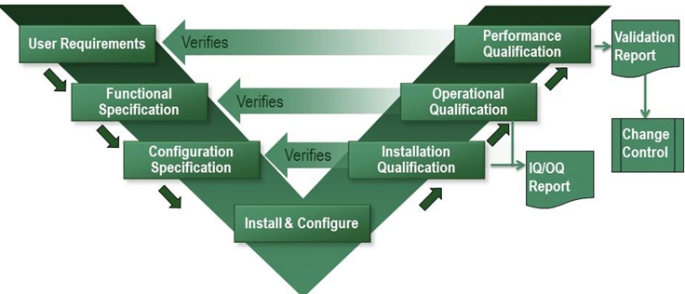
CSV-processNothing, except that when a company opts for COTS, the COTS vendor supplies only the COTS software package, which still leaves everything other than it with the ownership, management and maintenance by the company. The company still incurs significant costs on critical areas such as maintenance, administering the internal network connections, securing the data, creating disaster recovery contingencies and keeping the required hardware viable, which is very capital-intensive.

Labels: , , , , , ,

Wednesday, 3 May 2017

FDA requirements on data integrity and its implementation


The phrase “data integrity” seems to be everywhere. It is used in a number of places and situations, and the FDA has its own definition of the term. At its plainest, data integrity is defined as the assurance that data is complete, consistent and accurate. FDA requires this data to be attributable, legible, contemporaneously recorded, to be an original or a true copy, and to be accurate. This criterion is embodied in the acronym ALCOA.
Is just an understanding of this definition sufficient? In order to understand data integrity from the computerized systems point of view; one has to apply 21 CFR Part 11 and Annex 11 to data. Its implementation is considered difficult for a number of reasons. To apply data integrity to computer systems, one needs to understand the concept of data integrity.
Understanding is necessary in view of the FDA’s stepped up inspections
It is only this basic understanding that will help to determine what needs to be done to meet national and global data integrity requirements. This is all the more important in view of the fact that regulatory agencies such as the FDA have accelerated inspections related to data integrity, as a result of which there has been a big rise in the number of citations relating to data integrity.
When it comes to data integrity for computerized systems, the requirements set out in 21 CFR Part 11 and Annex 11 need to be kept in mind from the following perspectives:
o  The background to and the way in which 21 CFR Part 11 and Annex 11 have evolved and why they are being talked about all over again
o  An understanding of the full overview of Part 11 and Annex 11 and their key requirements  
o  Clear understanding of how the use of Risk Based Assessment will not only achieve data integrity and compliance but also bring down work considerably
o  The FDA’s and other regulatory authorities’ method of inspecting computerized systems for data integrity.
A complete two-day exploration of data integrity from the FDA’s perspective
It is to familiarize IT professionals and professionals who work on data integrity that GlobalCompliancePanel, a leading provider of professional trainings for the areas of regulatory compliance will be organizing a two-day seminar.
The Director of this seminar is Angela Bazigos, who is CEO of Touchstone Technologies Silicon Valley. Angela brings over 40 years in the healthcare and life sciences industries. To gain the benefit of Angela’s experience in the industry and to discover ways of ensuring data integrity in the computer systems of a number of healthcare and life sciences disciplines, please register for this seminar by visiting http://www.globalcompliancepanel.com/control/globalseminars/~product_id=900946SEMINAR?wordpress_SEO . This course has been pre-approved by RAPS as eligible for up to 12 credits towards a participant's RAC recertification upon full completion.
Practical understanding of data integrity
This seminar is very hands-on and is meant to offer guidance on how to ensure data integrity in highly regulated industries. It is of relevance and importance to both beginners and experienced professionals alike. She will offer a completely detailed experience of validation and 21 CFR Part 11 compliance that a computer system needs to have.
One of the major takeaways of this seminar is the templates Angela will give to participants, which will help them build a full package for meeting data integrity for computerized systems. She will also detail the activities associated with Computer Systems Validation, exploring areas such as:
o  What is Data Integrity and how is it implemented
o  How to use Risk Based Assessments to reduce work while still achieving Data Integrity and Compliance?
o  Data Integrity Frequently Asked Questions
o  Validation Master Plan
o  Risk Based Assessment
o  Complete Validation for a System (software development lifecycle)
o  Automated Test Tools
o  Infrastructure Requirements
o  Change Control
o  SOPs.
https://www.fda.gov/downloads/drugs/guidances/ucm495891.pdf

Labels: , , , , ,