Tuesday, 31 October 2017

Putting an effective complaint and recall management system in place


Putting an effective complaint and recall management system in place1
Complaints very strongly show a company how its products or services are perceived where it matters the most -in the customer’s mind. Complaint handling is one of the key indicators of how seriously a business takes its customers’ point of view. Complaints are to be expected from about any product; but their importance is all the more felt in an area like medical devices, because these products can affect the very life of their users.
In the context of medical devices; complaints are any communication made in writing, electronically or in verbal form about any of these aspects of a medical device after its release for the purpose of distribution: identity, quality, durability, reliability, safety, effectiveness, or performance
FDA and ISO standards

Shared medical knowledge benefits his coworkers and patients
The FDA has a very clear and well-defined set of regulatory guidelines on complaint handling in the field of medical devices. These are set out in FDA 21 CFR 820.198. The FDA requires medical device companies to also comply with ISO 13485:2016 Section 8.2.2., which suggests what document procedures to put in place to ensure timely handling of complaints in a compliant manner. Just how seriously the FDA takes complaint handling can be gauged from the fact that deficiency in complaint handling is one of the top reasons quoted for issuance of 483’s by the FDA.
Although complying with these regulations is a part of regulatory requirements; these regulations only mention what needs to be done in order to maintain a complaint and recall management system; how to do it is left to the individual medical device company. These regulations specify the exact elements of a complaint handling system, such as maintaining complaint files, proceeding about the complaints in a timely manner, documenting verbal complaints, and so on. However, it is up to the medical device manufacturer to implement the complaint handling and recall system in such a manner that it is perfectly streamlined and organized to the point where the complaint is handled exactly in the manner prescribed.
Full learning on how to implement an effective and compliant complaint and recall management system
The ways by which medical device companies can do this to optimize their complaint handling mechanism will be the teaching from a two-day seminar that GlobalCompliancePanel, a leading provider of professional trainings for all the areas of regulatory compliance, is organizing. At this seminar, John Kasoff, Director of Regulatory Affairs, Life-Tech, Inc. and Principal Consultant at Lean to Quality, LLC, who brings more than three decades of experience in Quality and Regulatory management, during which he has implemented and overseen quality system operations and assured compliance, at all companies of all sizes, from start-up to more than $100 million in revenue; will be the Director.

Putting an effective complaint and recall management system in place3
Please visit Putting an effective complaint and recall management system in place to enroll for this seminar and gain thorough understanding of how to put an effective complaint and recall management system in place. This seminar has been pre-approved by RAPS as eligible for up to 12 credits towards a participant’s RAC recertification upon full completion.
An activity that cuts across many cross functions
Jeff will emphasize the point that complaint handling is a highly coordinated, cross functional area for a medical device company’s Quality System. Almost all niche areas of the medical device company, such as customer service, sales and marketing, Regulatory Affairs, QA, R and D, and Quality Engineering, are involved in complaint handling. This makes the need for orchestrated coordination and synchrony between these departments a must, for if the complaint handling mechanism is not well lubricated; it is bound to make the complaint handling act a failure, inviting all the undesirable penal actions from the regulatory and enforcement agencies.
John will highlight the role and importance of each of these functions in complaint handling. In these, activities relating to defining, documenting, and implementing a complaint-handling system, the requirements for complaint review, investigation, and corrective action, as well as ISO-specific implications, will be discussed in detail.
Distinguishing between complaints and “non-complaints”
He will also explain what constitutes a complaint, and will suggest recommended practice on the ways of handling “non-complaint” feedback. He will also show how to apply risk management to a complaint handling system, and explain a specific risk management system to drive home this point.
A substantial part of this seminar will be spent on making a streamlined review of the regulations, at which the critical process requirements for compliance with the regulations will be examined in detail. Jeff will offer straightforward and compliant recommendations for the methods of documentation relating to complaint records, root cause investigations, and corrective actions, and show how to apply risk management principles to complaint investigation.
To join us for more information, get in touch

Labels: , , , ,

Wednesday, 25 October 2017

Understanding Kidney Tumours

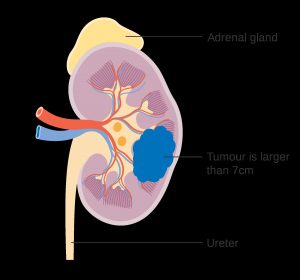
Kidneys are two bean-shaped organs located on the left and right side of the spine. They sit against the back muscles in the upper abdominal cavity. They are responsible for the extraction of waste from the blood, balancing body fluids, formation of urine, and facilitating other important functions of the body.
Kidney tumours are tumours (or growths) on or in a kidney and are also known as renal tumours. They can be benign (harmless) or malignant (leading to cancer).
Understanding Kidney Tumours.jpg
There are many forms of kidney tumours. Among the malignant types, the most commonly occurring type of kidney cancer is Renal Cell Carcinoma (RCC), accounting for 95% of cases in adults. The other types are Mesoblastic Nephroma (a congenital tumour, detected prenatally or after birth, before the age of 4), and Metastatic tumour or ovarian cancer. Among the benign forms of tumours are Renal Oncocytoma (a tumour made by special cells called oncocytes), Cystic Nephroma (a benign tumour that can look like an RCC and has cysts), Angiomyolipoma (most common form of benign tumours, though they can cause blood vessels to dilate and burst, leading to bleeding), Metanephric Adenoma (a rare tumour that can look like a papillary RCC) and Renal Medullary Fibroma (bland spindle-shaped or stellate-shaped cells that form a benign tumour).
Any problem with the kidneys is usually accompanied by symptoms such as difficulty in passing urine, blood in urine, pain in the abdomen, etc. However, not all kidney problems are caused by tumours. The tumours can be detected through:
1) Blood and urine tests
2) Imaging tests such as CT and MRI scans
3) Biopsy (removing a sample tissue of the kidney)
Are you ready to Growing Up

Labels: ,

Thursday, 19 October 2017

Drug dissolution testing and establishing plasma drug levels in humans

Drug dissolution testing and establishing plasma drug levels in humans5
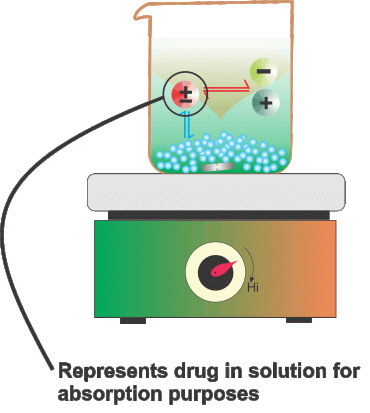
Dissolution testing is a very important tool that determines and help understand the performance and effectiveness of oral solid dosage forms. It is significant for the field of medicine because if a drug has to be effective, it must be released first from the product form, and it should then be allowed to get dissolved in the gastrointestinal fluids. This is the first step that leads to the next important phase, that of the dosage’s absorption into the bloodstream. This points to the fact that dissolution from the dosage form is a major determinant of the rate and extent to which the drug gets absorbed by the body.
Drug dissolution testing is very important during the development of drugs and drug formulations. It helps to determine if the right concentration of the drug reaches the desired or expected locus of action. This makes the investigation of the factors which affect drug absorption into the human blood flow when a drug product is taken orally important.
The usual method of measurement of drug absorption is in vivo, or, the body of a living being such as a human or animal. Time blood plasma concentration profiles of drugs after oral administration constitute an important in vivo parameter. In-vitro investigations are carried out for identifying the parameters involved in drug absorption. These are investigations that are conducted in a controlled and simulated environment that resembles biological conditions closely.
Thorough learning of drug dissolution
Drug dissolution testing and establishing plasma drug levels in humans
An important seminar from GlobalCompliancePanel, a leading provider of professional trainings for all the areas of regulatory compliance, will offer valuable learning on all the aspects of drug dissolution testing and explain the ways of establishing plasma drug levels in humans.
At this two-day seminar, Dr. Saeed Qureshi, who has worked as a research scientist with Health Canada and is an internationally known expert on the subject whose expertise spans the areas of drug dissolution testing, pharmacokinetics, biopharmaceutics and analytical chemistry as related to animal and human studies for developing and evaluating pharmaceutical products; will be the Director.
In order to gain the benefit of learning from this world-renowned expert, please enroll for this seminar by visiting Drug dissolution testing and establishing plasma drug levels in humans. This course has been pre-approved by RAPS as eligible for up to 12 credits towards a participant’s RAC recertification upon full completion.
All aspects of drug dissolution and establishing plasma drug levels
Drug dissolution testing and establishing plasma drug levels in humans1
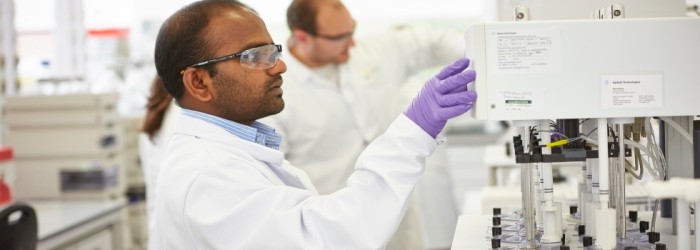
This seminar will provide its participants a unique opportunity to learn scientifically valid drug dissolution testing and establishing plasma drug levels. Lab personnel take several approaches to conduct dissolution testing using different apparatuses and methods. This makes section of an appropriate apparatus and method confusing and challenging. Dr. Qureshi will offer relevant pharmacokinetics and physiological background that is aimed at making this choice easier and intuitive. He will use simple and clear language in helping participants understand how to select or develop a dissolution method. He will describe the theoretical aspect of the drug dissolution testing, including method development, in detail. He will explain the pros and cons of different approaches.
Another important area that Dr. Qureshi will address is in vitro-in vivo correlation (IVIVC). He will address the particular issue of the use of the concepts of convolution/deconvolution and IVIVC in providing an estimate/prediction of expected drug levels in humans through drug dissolution testing. This approach has met with limited success. Dr. Qureshi will explain the reasons for this and suggest alternative approaches and will offer an explanation of the underlying scientific principles involved in convolution, deconvolution and IVIVC techniques with simple practical examples. He will describe a unique and simple approach based on convolution technique using spreadsheet software.
He will show in vitro drug dissolution testing and convolution/deconvolution techniques for predicting plasma drug levels using the principles of pharmacokinetics and physiology. Dr. Qureshi will cover the following main areas at this seminar, with its relevant subtopics:
Personnel who work in various levels of the areas of Pharmaceutical Development, setting up analytical methods (pharmacopeial, regulatory or in-house developed), R & D (both analytical and formulation), Project Management, Quality Control, Quality Assurance, and Regulatory Affairs will benefit enormously from this learning.
To join us for more information, get in touch

Labels: , , ,

Monday, 9 October 2017

Drugstore stocks tumble as Amazon considers selling prescription drugs online

Drugstore stocks tumble as Amazon considers selling prescription drugs online
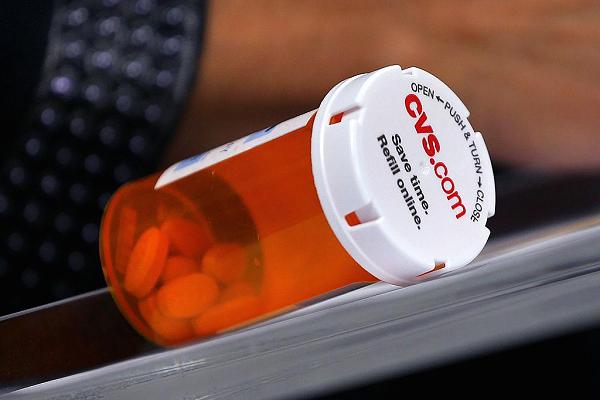
Shares of drugmakers dropped in midday trading Friday after CNBC reported Amazon is in the final stages of considering an entrance into selling drug prescriptions.
Walgreens, Rite Aid and CVS Health stocks each slipped 4 percent or more as investors worried Amazon may disrupt the traditional distributors’ hold on the drug prescription market.
Amazon will decide before Thanksgiving whether to move into selling prescription drugs online, according to a source and an email from Amazon viewed by CNBC.
Amazon typically spends years researching opportunities before it telegraphs its intentions. The opportunity to sell drugs online is alluring given its market size – analysts have estimated the U.S. prescription

Read More: http://snip.ly/j7tf0#https://www.cnbc.com/2017/10/06/drugstore-stocks-tumble-as-amazon-considers-selling-prescription-drugs-online.html

Labels: , , ,