Wednesday, 8 November 2017

Study finds link between increased brain glucose levels and Alzheimer’s

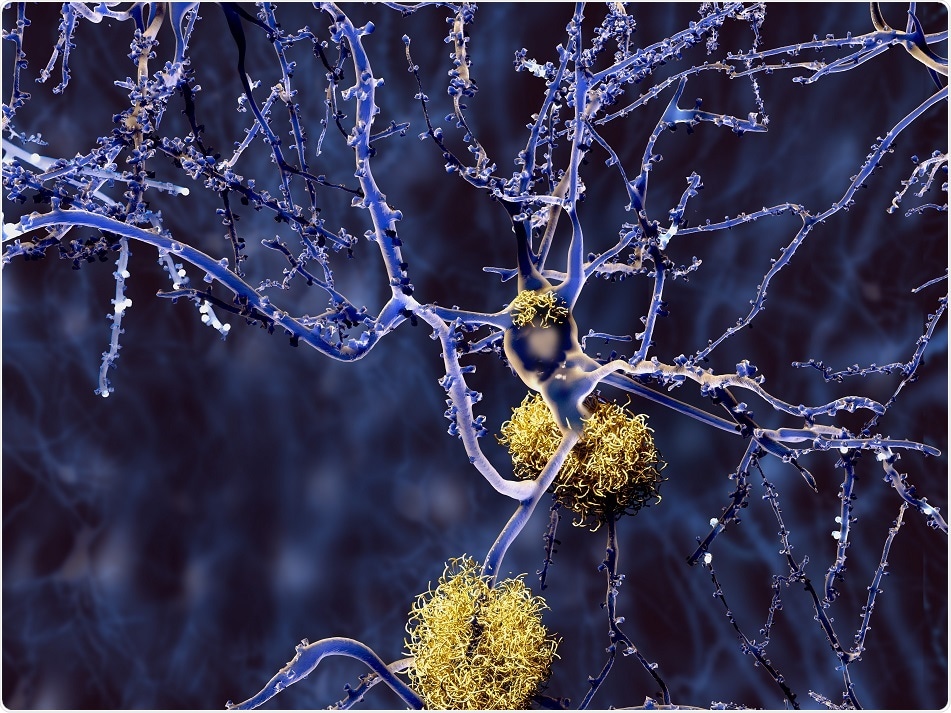
A new study published yesterday in Alzheimer’s & Dementia: the Journal of the Alzheimer’s Association, found a link for the first time between abnormalities in the mechanism of glucose breakdown in the brain and the severity of tangles and amyloid plaques in the brain, as well as the commencement of visible symptoms of Alzheimer’s disease.
Credit: Juan Gaertner / Shutterstock.com
This National Institute on Aging-supported study analyzed the brain tissue samples at autopsy from participants involved in the Baltimore Longitudinal Study of Aging (BLSA). BLSA, which is one of the world’s longest-running scientific studies on human aging, records neurological, psychological as well as physical data of participants over many decades.
In the study, glucose levels in various areas of the brain, such as the temporal and frontal cortex that are prone to Alzheimer’s disease pathology as well as some resistant areas like the cerebellum, were evaluated.
The researchers investigated three different categories of BLSA participants during the study — (a) participants with Alzheimer’s symptoms throughout life and with confirmed pathology of Alzheimer’s disease, including neurofibrillary tangles and beta-amyloid protein plaques in the brain at the time of death; (b) those who lacked symptoms throughout life, yet had notable levels of Alzheimer’s pathology identified during the brain post-mortem; and (c) healthy controls.
The findings indicated discrete abnormalities in glycolysis, which is the major process involved in the breaking down of glucose in the brain, and provided evidence associating the severity of the abnormalities with the severity of the disease pathology.
Poorer glycolysis rates and increased levels of brain glucose were linked with more severe tangles and plaques in the brains of people affected with Alzheimer’s. Also, the more serious declines in brain glycolysis were associated with the manifestation of disease symptoms like memory issues during life.
Richard J. Hodes, M.D, the NIA Director, commented that this kind of research initiates novel ideas on how to investigate the connections between glycolysis, symptoms, and the disease pathology in escalating the search for better and more effective treatment and prevention methods for Alzheimer’s disease.
Even though the likenesses between Alzheimer’s and diabetes had been suspected for a long time, an evaluation of the link has remained difficult, as insulin is not required for the entry of glucose to the brain or to the neurons.
Glucose used by the brain was tracked by calculating ratios of the amino acids serine, alanine and glycine to glucose, which allowed the assessment of rates of the vital steps involved in glycolysis.
The researchers identified that in comparison with samples of normal brain tissue, the enzyme activities that controlled those vital glycolysis steps were lesser in Alzheimer’s cases.
continue to

Labels: , , ,

Monday, 30 October 2017

The science of Sad: understanding the causes of ‘winter depression’

The science of Sad
For many of us in the UK, the annual ritual of putting the clocks back for daylight saving time can be accompanied by a distinct feeling of winter blues as autumn well and truly beds in. This might be felt as a lack of energy, reduced enjoyment in activities and a need for more sleep than normal. But for around 6% of the UK population and between 2-8% of people in other higher latitude countries such as Canada, Denmark and Sweden, these symptoms are so severe that these people are unable to work or function normally. They suffer from a particular form of major depression, triggered by changes in the seasons, called seasonal affective disorder or Sad.
In addition to depressive episodes, Sad is characterised by various symptoms including chronic oversleeping and extreme carbohydrate cravings that lead to weight gain. As this is the opposite to major depressive disorder where patients suffer from disrupted sleep and loss of appetite, Sad has sometimes been mistakenly thought of as a “lighter” version of depression, but in reality it is simply a different version of the same illness. “People who truly have Sad are just as ill as people with major depressive disorder,” says Brenda McMahon, a psychiatry researcher at the University of Copenhagen. “They will have non-seasonal depressive episodes, but the seasonal trigger is the most common. However it’s important to remember that this condition is a spectrum and there are a lot more people who have what we call sub-syndromal Sad.”
Around 10-15% of the population has sub-syndromal Sad. These individuals struggle through autumn and winter and suffer from many of the same symptoms but they do not have clinical depression. And in the northern hemisphere, as many as one in three of us may suffer from “winter blues” where we feel flat or disinterested in things and regularly fatigued.
Putting the clocks back for daylight saving time can be accompanied by a distinct feeling of winter blues.
One theory for why this condition exists is related to evolution. Around 80% of Sad sufferers are women, particularly those in early adulthood. In older women, the prevalence of Sad goes down and some researchers believe that this pattern is linked to the behavioural cycles of our ancient ancestors. “Because it affects such a large proportion of the population in a mild to moderate form, a lot of people in the field do feel that Sad is a remnant from our past, relating to energy conservation,” says Robert Levitan, a professor at the University of Toronto. “Ten thousand years ago, during the ice age, this biological tendency to slow down during the wintertime was useful, especially for women of reproductive age because pregnancy is very energy-intensive. But now we have a 24-hour society, we’re expected to be active all the time and it’s a nuisance. However, as to why a small proportion of people experience it so severely that it’s completely disabling, we don’t know.”
There are a variety of biological systems thought to be involved, including some of the major neurotransmitter systems in the brain that are associated with motivation, energy and the organisation of our 24-hour circadian rhythms. “We know that dopamine and norepinephrine play critical roles in terms of how we wake up in the morning and how we energise the brain,” Levitan says. One particular hormone, melatonin, which controls our sleep and wake cycles, is thought to be “phase delayed” in people with severe Sad, meaning it is secreted at the wrong times of the day.
Another system of particular interest relates to serotonin, a neurotransmitter that regulates anxiety, happiness and mood. Increasing evidence from various imaging and rodent studies suggests that the serotonin system may be directly modulated by light. Natural sunlight comes in a variety of wavelengths, and it is particularly rich in light at the blue end of the spectrum. When cells in the retina, at the back of our eye, are hit by this blue light, they transmit a signal to a little hub in the brain called the suprachiasmatic nucleus that integrates different sensory inputs, controls our circadian rhythms, and is connected to another hub called the raphe nuclei in the brain stem, which is the origin of all serotonin neurons throughout the brain. When there is less light in the wintertime, this network is not activated enough. In especially susceptible individuals, levels of serotonin in the brain are reduced to such an extent that it increases the likelihood of a depressive episode.
The most popular treatments for Sad is bright-light therapy.
Read More: http://snip.ly/25gi4#https://www.theguardian.com/lifeandstyle/2017/oct/30/sad-winter-depression-seasonal-affective-disorder
Click here To join us for more information, get in touch

Labels: , , , , ,

Thursday, 26 October 2017

Precision medicine: From ‘one-size-fits-all’ to personalized healthcare

Precision medicine From traditional to personalized healthcare
Imagine a future in which, rather than using symptoms to identify a disease, your genes, metabolism, and gut microbiome inform how your individual health is managed. This is the vision of precision medicine.
Traditional medicine uses symptoms to diagnose diseases, and drugs to treat these symptoms. But precision medicine aims to turn this concept on its head.
By identifying the factors that predispose a person to a particular disease and the molecular mechanisms that cause the condition, treatment and prevention strategies can be tailored to each individual. 
So, how do we get from traditional to precision medicine? Advances in genetics and molecular analysis techniques have been a deciding factor, as has getting patients involved with managing their own health.
However, is precision medicine going to revolutionize how we treat all medical conditions, or will it be the privilege of a select few?

Innovation drives precision medicine

To the National Institutes of Health (NIH), “[P]recision medicine is a revolutionary approach for disease prevention and treatment that takes into account individual differences in lifestyle, environment, and biology.”
Launched by President Barack Obama in 2015, the Precision Medicine Initiative “will pioneer a new model of patient-powered research that promises to accelerate biomedical discoveries and provide clinicians with new tools, knowledge, and therapies to select which treatments will work best for which patients.”
Breakthroughs in molecular biology have been key to getting precision medicine off the ground.
Next-generation DNA sequencing is now routinely used to identify genetic mutations that drive specific cancers, and biomarkers that predict disease risk or how well a person will respond to a particular treatment are increasingly becoming reality in medical practice.
Cancer is the one area wherein precision medicine seems to be making significant headway. New therapies seek to target the specific cellular pathway that is being exploited by a cancer, with the view to making short the life of the tumor.
This approach is already being employed in clinical trials to treat patients with melanoma who have a mutation in the BRAF gene, as Medical News Today reported recently.
Are you ready to join us to Keep Growing Up

Labels: , , , ,

Thursday, 17 August 2017

Special Deal 2017 for Healthcare Compliance Course Attendees! JUST $10


For regulatory professionals who work in the field of healthcare, compliance with the regulatory requirements is a must. We are all aware of it. But if the cost of healthcare compliance courses is causing you to put off your trainings, GlobalCompliancePanel has the answer: Its special deal in 2017 for healthcare compliance course attendees makes trainings in healthcare compliance available for $10. Yes, you’ve read that right. All it takes is $10 to enroll for a course in healthcare compliance and start your journey to becoming an ace in regulatory compliance in healthcare!

This special deal 2017 from GlobalCompliancePanel for healthcare compliance course attendees brings invaluable trainings in healthcare compliance for $10. And all of these, from the best experts, the same experts who have been helping healthcare professionals like you take the next steps to ascending in their healthcare careers. The difference of course, is that these courses, which used to be priced at $265 originally, become available at this unbelievable price as part of special deal 2017 for healthcare compliance course attendees for just $10!

Why is GlobalCompliancePanel offering this ridiculously low price on this special deal 2017 for healthcare compliance course attendees for just $10 a webinar? Simple: it wants more and more healthcare professionals to come into the compliance training net. The aim is to equip them with the latest knowledge needed for meeting healthcare regulatory requirements that the regulatory agencies set from time to time. What could be a better way to augment your learning of the core aspects of healthcare compliance than with this special deal 2017 for healthcare compliance course attendees, at just $10?


This is a kind of offer that doesn’t come once too often. In fact, healthcare professionals will have a tough time trying to figure out just when they came across an offer as monstrous as this! Ever heard of a 95% offer on a special deal 2017 for healthcare compliance course attendees? This is what this $10 offer is. All that it takes to meet healthcare regulatory expectations and demands, raise your reputation in the eyes of your customers and stakeholders, and to completely cut down on the horrendous costs of noncompliance is a mere $10 a course!

GlobalCompliancePanel brings a large and wide variety of courses that suit this special deal 2017 for healthcare compliance course attendees. For just $10, you could take up a course that explains everything you needed to know as a healthcare provider about data security analysis. Get to understand how the concept of  “meaningful use” applies to data security analysis. Understand how regular assessment of data security risks is required for healthcare providers that are adapting electronic medical records and meet HIPAA requirements.

Want to assess the legal risks that the use of social media carries in the healthcare industry? Then, explore more on this by hearing the expert on compliance with health care, pharmaceutical and tax exemption laws and regulations, Jeffery P. Drummond.

This is just a sprinkling among a vast number and variety of webinars that you can get to hear as part of this special deal 2017 for healthcare compliance course attendees for just $10 a course. Enroll today! Derive value into your healthcare profession!


 Contact Details:
+1-800-447-9407

Labels: , , ,